
The Way Two-Year-Olds Play
Watching a two-year-old play is sure to bring a smile to anyone’s face. Their creativity, energy, imagination, innocence, and their ability to do the same thing over and over and still find it amusing is simply a joy to be around. Whether in childcare, daycare, or home with parents or a sitter, watching your two-year-old play will not only illicit some solid laughs, it can also give you insight into your little one’s development. Let’s spend some time looking at the way these littles play and how their early childhood education journey benefits through the laughter!
Play is such a pivotal piece of early childhood education–and the opportunity to play different kinds of ways provides children with a slew of learning opportunities! Call today to schedule a tour here at Summit Preparatory Academy and see the various centers, toys, and indoor and outdoor play areas we have set up for our students to play (and learn) all day!
1. Parallel Play: Growing Side-by-Side
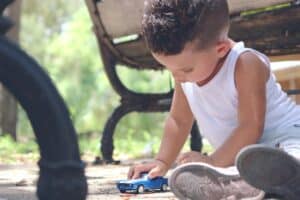
Have you ever seen two toddlers get together for play time–full of excitement and adoration for their friend only to play next to each other rather than with one another? While this may look strange from the outside looking in, this is actually a developmentally appropriate stage of play called parallel play (Source). In parallel play, children will play next to each other, often imitating one another without directly interacting. This type of play has been shown to help build social awareness and the play skills that will help little ones as they learn to play together (Source). Here at Summit Preparatory Academy, we support children in their play by offering shared toys, providing ample play time, and in modeling and encouraging healthy interaction. Call today to ask about our classroom openings and to schedule a tour and see what games and fun we’re up to, today!
2. Pretend Play: Where Imagination Come to Life
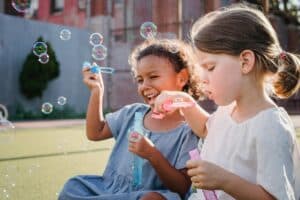
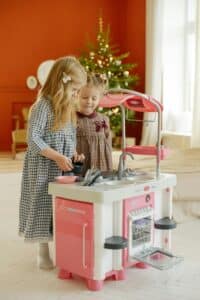
Feeding dolls, driving toy cars, hosting tea parties with pretend food…pretend play opens up countless worlds for two-year-olds to jump into. According to the Child Mind Institute, pretend play isn’t just for fun, but can be a tool for nurturing critical developmental in a your little one’s early childhood education. Play such as this can boost their creative thinking, emotional regulation, social competence, executive functioning, and language skills.
Pretend play is life here at Summit Preparatory Academy! Come by for a tour to see our awesome centers, toys, and to ask how our early childhood educators encourage play in their classrooms.
 3. Everyday Objects as Toys
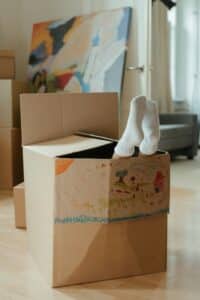
Toddlers do not need the latest and greatest toys to have a good time. In fact, sometimes the things they want most are the everyday items they see the people in their lives using. Pots, pans, cardboard boxes, and whisks are excellent items for the toy box. Research supports that handling real-world objects can help develop motor skills, problem solving and creativity!
Whether at home, in a childcare, or a daycare setting, implementing real-life objects into play is an easy and exciting way to add to a two-year-olds playtime. Call us up here at Summit Preparatory Academy, to schedule a tour and see what fun activities we have planned for each of our early childhood education classes.
4. Repetition Builds Memory
Same game over and over? Great fun! You might notice your two-year-old asking for the same, song, book, or playing the same game repeatedly. While this repetition might be difficult for an adult to stomach, it is excellent for a young child. In repeating an activity, song, book, etc. children are strengthening their language, memory and emotional security (Source).
We recognize that repetition is a major part of learning within early childhood education. We are happy to read that book, sing that song or play that game over and over again here at Summit Preparatory Academy. Schedule a tour today and see what some of the classroom favorites are.
5. Private Speech: Talking Themselves Through Play
Is your toddler talking to themselves while they play? This is common within early childhood education and is not simply meaningless chatter but rather is an important and intentional cognitive processing called private speech. A study published by The Frontiers of Developmental Psychology actually found that children frequently use private speech as a self-regulatory and planning tool during problem-solving tasks.
Our classrooms are full of play and chatter here at Summit Prep Academy. Call today to check on our class openings and to come by for a tour; we would love to share a bit of our day with you!
Conclusion: Play is Learning in Action
For two-year-olds, play is more than entertainment, it’s a foundation for their growth. Every playful moment is nurturing their development and provides lovely bonding opportunities. Unstructured play has been strongly linked to improved executive function skills, setting these little ones up for success in their early childhood education journey and beyond (Source).
Our educators here at Summit Preparatory Academy are wonderful facilitators of play and imagination. They implement lesson plans on a daily basis to provide their students with a well-rounded early childhood education that would lay the foundation for every child’s future growth. Call us today to come by and meet our teachers, see their lesson plans, and tour our classrooms and playground. Let us show you how we can be an excellent fit for your family’s early childhood education needs.